


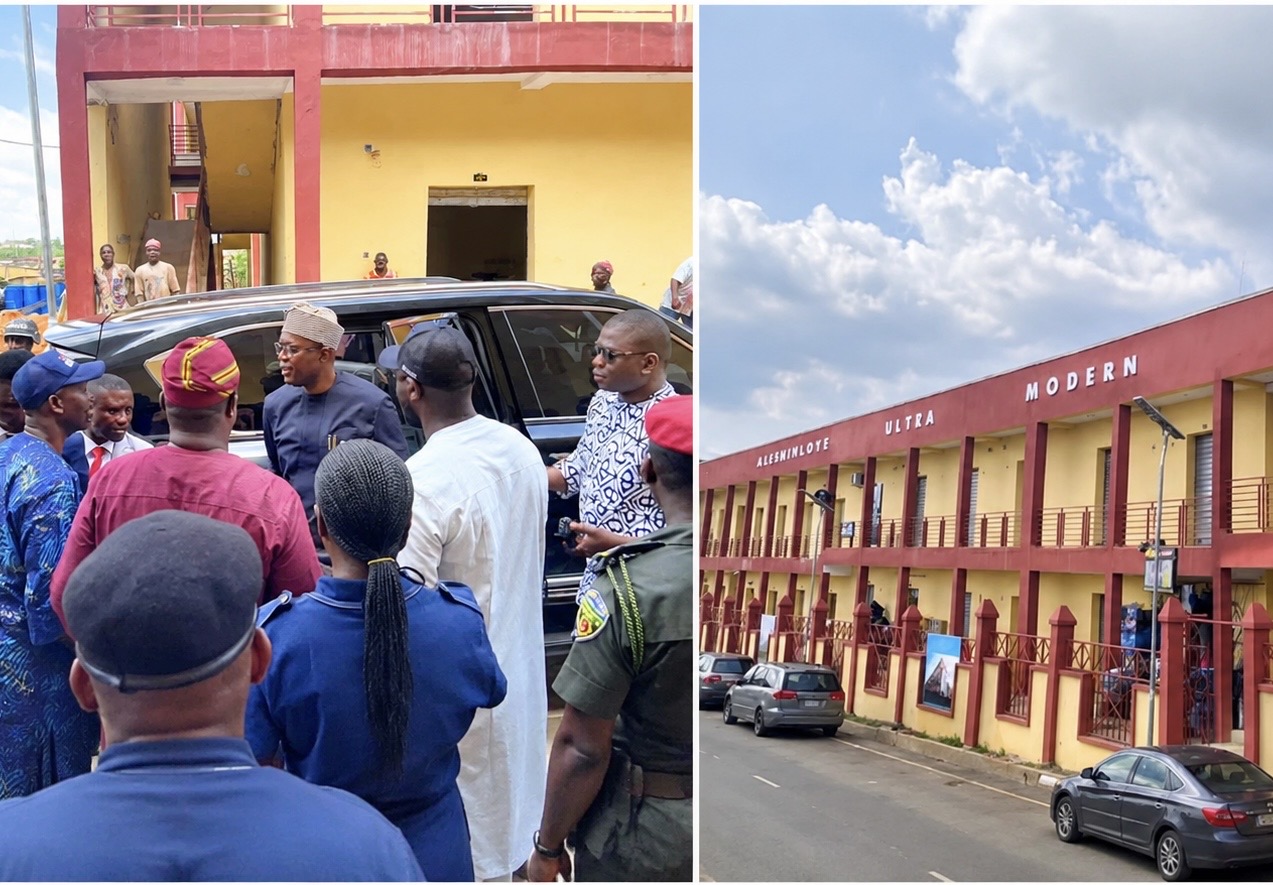
In a move that places traders’ welfare at the centre of governance, Oyo State Governor, Seyi Makinde, has handed over 88 reconstructed shops to fire victims at Aleshinloye Market, Ibadan, while announcing ₦100 million in financial assistance for 400 traders affected by a similar disaster at Bode Market.
The interventions, carried out on Wednesday, represent a significant effort to restore livelihoods, revive businesses and provide relief to traders whose means of survival were disrupted by devastating market fires.
At Aleshinloye Market, 88 traders whose shops were destroyed by fire last year received their reconstructed shops, paving the way for them to resume commercial activities and rebuild their businesses.
For the beneficiaries, the handover represents more than the return of physical structures. It offers an opportunity to recover lost income, restore business relationships and regain some measure of economic stability after months of uncertainty.
The governor subsequently visited Bode Market, where traders had also suffered substantial losses following a fire outbreak. In response, Makinde announced financial assistance of ₦250,000 for each of the 400 affected traders, amounting to a total of ₦100 million if the full assistance is disbursed to all beneficiaries.
The twin interventions have brought renewed attention to the role of government in responding to emergencies that threaten the livelihoods of ordinary citizens, particularly small-scale traders who depend on daily commercial activities to support their families.
Beyond Political Promises, Concrete Interventions Matter
At a time when political actors are increasingly positioning themselves ahead of the 2027 general elections, the developments at Aleshinloye and Bode markets provide a fresh basis for assessing competing claims about governance and public welfare.
While the Makinde administration, like every government, remains open to scrutiny and constructive criticism, the reconstruction of the 88 shops and the announcement of financial assistance for Bode Market victims demonstrate practical steps taken to address the consequences of the disasters.
For traders who lost their shops, goods and sources of income, political rhetoric alone cannot repair the damage. What matters most is the availability of tangible support that enables them to return to business and rebuild their livelihoods.
The interventions also highlight an often-overlooked dimension of governance: leadership is measured not only by the construction of roads, bridges and other public infrastructure, but also by how effectively governments respond when citizens face unexpected hardship.
Reviving Businesses, Restoring Livelihoods
Markets remain central to Ibadan’s economic life, providing employment, sustaining households and supporting a network of suppliers, customers and other small businesses.
When fire destroys market stalls, the consequences extend beyond the immediate victims. Families lose sources of income, commercial activities are disrupted, and the wider local economy feels the impact.
Reconstructing shops and providing financial assistance to affected traders can therefore contribute to economic recovery by helping businesses reopen, restoring commercial activity and reducing the hardship associated with sudden losses.
For the beneficiaries, the immediate priority will be to put their businesses back on their feet. The effectiveness of the interventions will ultimately depend on how quickly the reconstructed shops become operational and how efficiently the announced financial assistance reaches the intended recipients.
A Test of Governance Ahead of 2027
As political activities gather momentum ahead of 2027, the developments offer a reminder that the concerns of ordinary citizens must remain central to public debate.
Beyond party affiliations and campaign promises, traders facing the consequences of market fires need practical solutions, timely assistance and sustained government attention.
For the Makinde administration, ensuring that all eligible Bode Market victims receive the announced ₦250,000 assistance will be an important next step in translating the pledge into measurable relief.
The reconstruction of the Aleshinloye shops and the financial assistance announced for Bode Market victims also raise a broader question for political stakeholders: how can governments at all levels develop more effective responses to disasters that threaten small businesses and livelihoods?
Ultimately, the success of any intervention will be judged by its impact on the people it is intended to serve.
For the traders at Aleshinloye and Bode markets, the immediate need is clear: to recover from their losses, reopen their businesses and regain the economic independence that sustains their families.
As the road to 2027 takes shape, the message is unmistakable: beyond political promises, the people need governance that delivers practical solutions when it matters most.